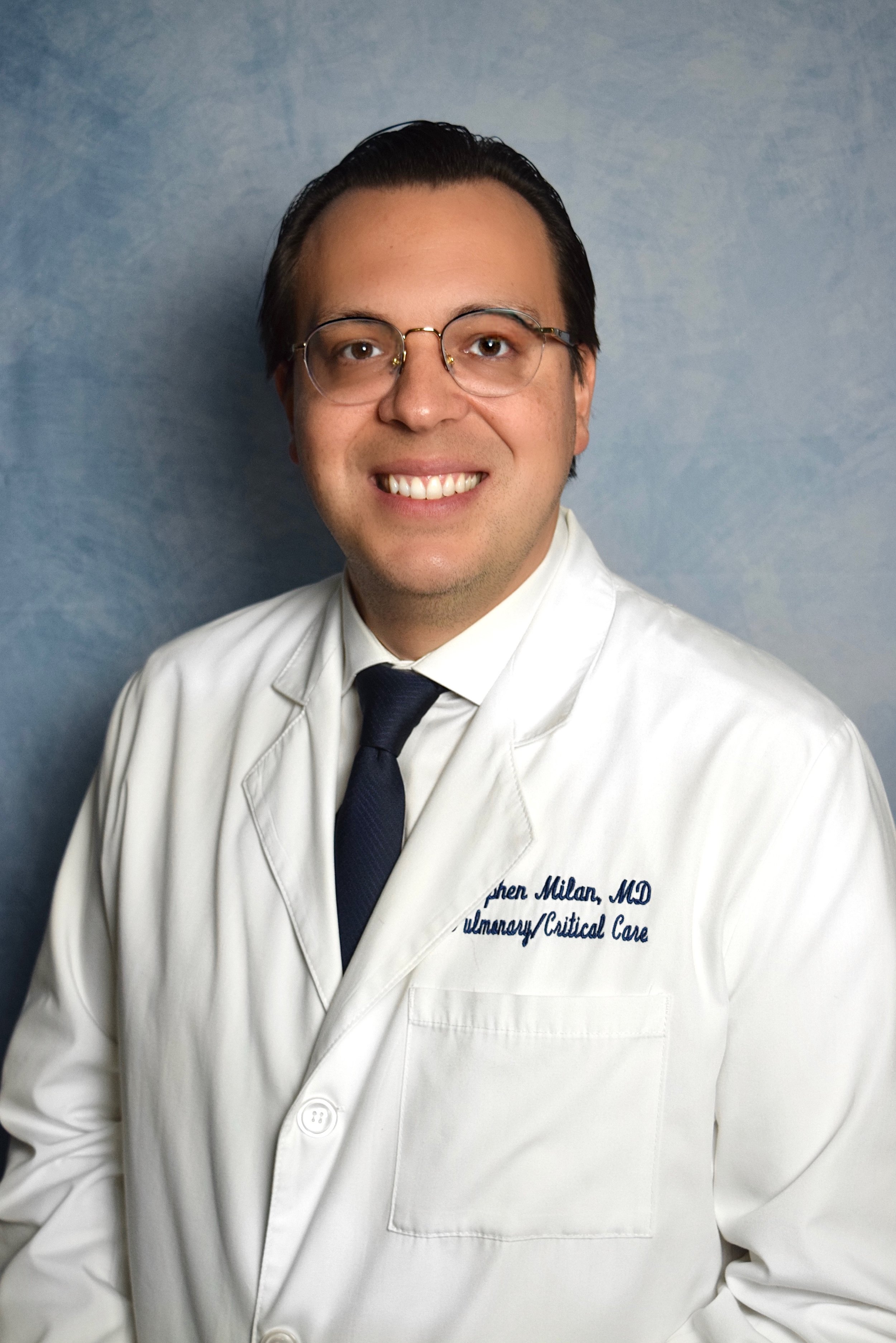
About Stephen Daniel Milan, MD
Dr. Milan graduated from Ross University School of Medicine and went on to residency at Memorial Sloan-Kettering and fellowship at New York Methodist Hospital. He is board certified in pulmonary and critical care medicine.
Dr. Milan started the critical care program at West Boca Medical Center and remains the program's director. He is a champion for lung cancer screening and diagnosis with Ion Robotic Navigational Bronchoscopy and EBUS at Delray Medical Center, performing many of these procedures every week.
He is also an active preceptor for medical and nurse practitioner students. Dr. Milan is fluent in Spanish.
For fun, Dr. Milan plays on an ice hockey team, sings acapella, and loves to travel with his wife and daughters.
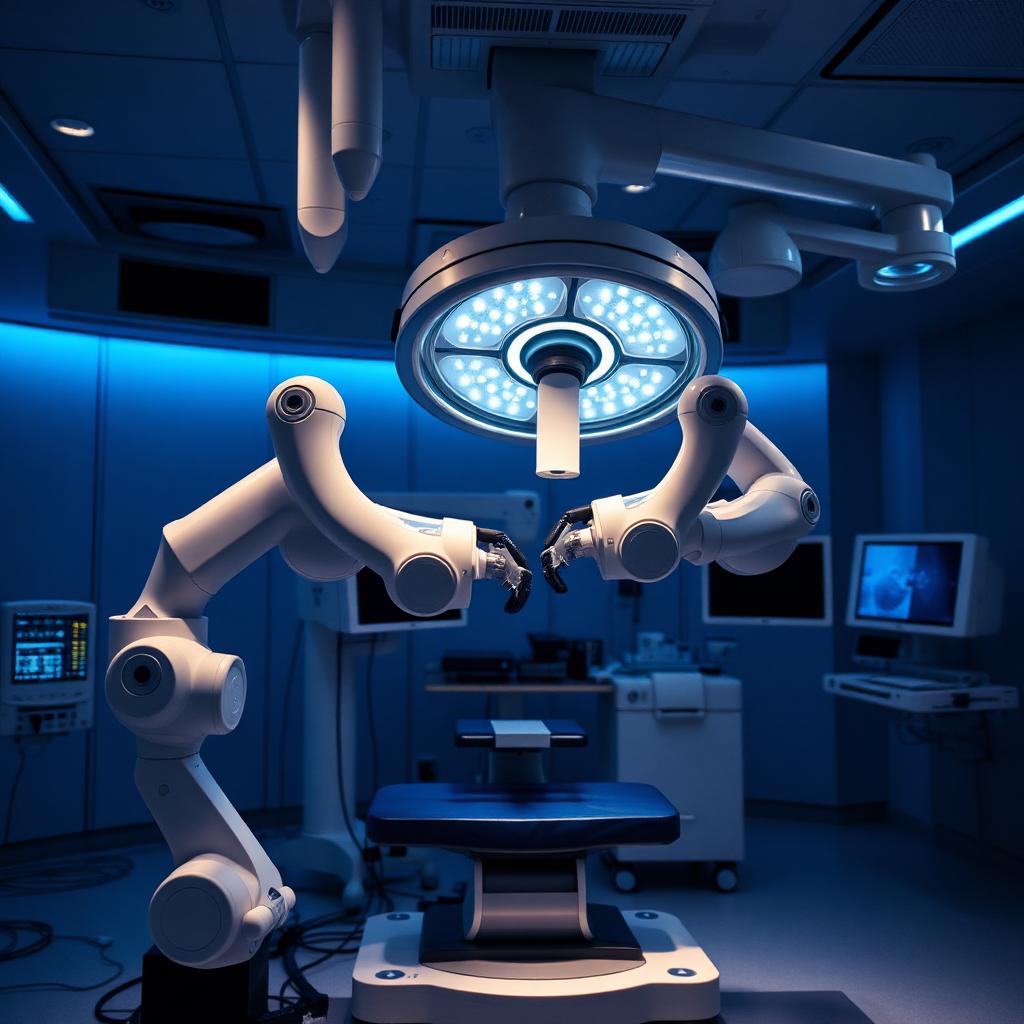
Robotic-Assisted Thoracic Care
The Intuitive da Vinci platform
Thoracic conditions affect the lungs, esophagus, trachea, ribs, and the membranes that line the chest. When lifestyle changes and medications aren't enough — or when a suspicious lung nodule needs a definitive biopsy — surgery is sometimes the right next step. In the past, that meant open thoracic surgery, a thoracotomy with long incisions and frequently the separation or removal of ribs.
Today, most of those procedures can be performed with minimally invasive surgery. Robotic-assisted surgery with the Intuitive da Vinci system uses just a few small incisions. The surgeon operates from a special console with magnified, high-definition 3D vision, guiding miniaturized wristed instruments and a camera. The result for patients is typically less pain, shorter hospital stays, and a faster return to normal life.
Dr. Milan coordinates the full robotic-assisted thoracic care journey from our Delray Beach office — including:
- ·Lung biopsy for suspicious nodules
- ·Lung surgery (lobectomy, segmentectomy, wedge resection)
- ·Mediastinal mass resection
- ·Thymectomy
- ·Esophagectomy referral
- ·Lymphadenectomy
Source and patient education on robotic-assisted thoracic surgery: Intuitive Surgical — Thoracic care options . Patients should consult their physician to decide whether robotic-assisted surgery is appropriate in their individual case.